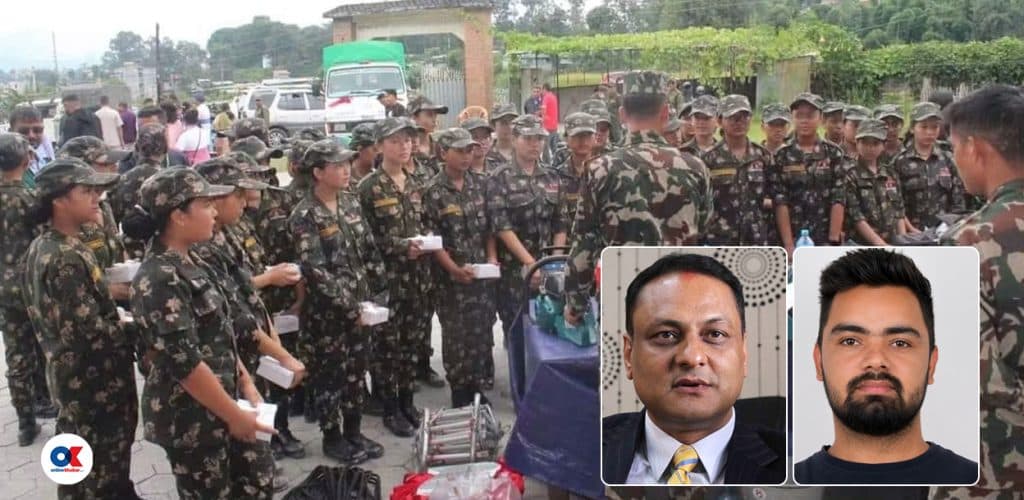
16 August, Kathmandu. Recently, a video and pictures of a rescue team wearing uniforms similar to the Nepalese army have been going viral on social media.
Curiosity and various comments have started among the general public saying that this group was active during the flood and disaster in Trishuli area.
Some have connected it with Prime Minister Balen Shah and even called it 'Balen's private army'. Some have questioned its legitimacy.
In fact, this group is not an army deployed by any political party or local level. It is an organization that is claimed to help students in environmental protection and disaster management.
According to Chief Marshal Savin Sharma of this organization, this group was started during the calamity.
This development carries broader significance for local communities, public services, and policy implementation across Nepal.
Key stakeholders, including institutional authorities and subject matter experts, emphasize that effective follow-through and transparency will be critical going forward.
Analysts note that sustained coordination among responsible bodies will determine the practical impact and long-term outcomes of these measures.
Community representatives have also stressed the importance of accessible public information, accountability, and timely delivery of services.
Looking at past trends and operational data, timely periodic reviews and structured oversight remain essential for tangible success.
The multidimensional impact of this matter on regional economic activity, social well-being, and institutional efficiency is being closely monitored by observers.
Concerned administrative departments and local stakeholders are expected to release updated procedural guidelines and timelines in the coming days.
Civil society groups, private sector participants, and regional representatives have underscored the value of continuous stakeholder consultation.