
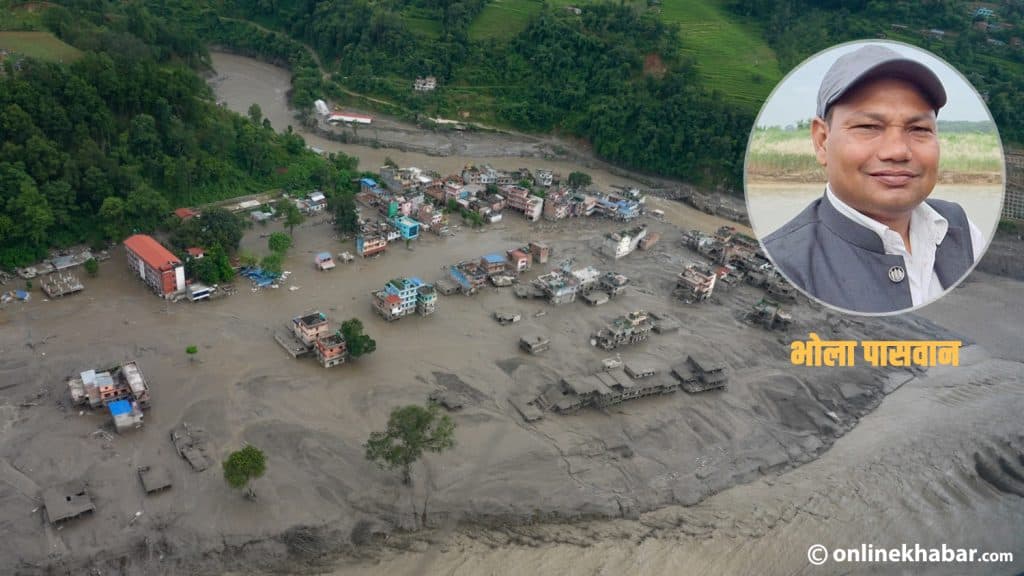
Nepal is one of the countries with the highest risk of disasters in the world due to the sensitivity of its geographical features and the rapid impact of climate change. In Nepal, disaster is not only a seasonal or accidental problem, but a structural risk directly linked to development, public finance, infrastructure, poverty reduction, food and water security, and national security.
Although policy and institutional structures have been established for disaster management and risk reduction, practical preparations, effective implementation of early warning systems and development of risk-sensitive infrastructure still remain major challenges.
The 6-year (2018-2024) periodic statistics of the National Disaster Risk Reduction and Management Authority, the progress report of the last 2 financial years and the scenario of the 10-year statistics show the dire situation of disasters in Nepal and our existing limits.
According to the authority's 6-year periodic statistics, the human and physical damage caused by disasters in Nepal is very terrible. During that period, a total of 32 thousand 375 disaster incidents have been registered across the country in which 2 thousand 996 people died, 446 people went missing and 11 thousand 752 people were injured.
Landslides have become the deadliest in terms of human losses among natural disasters during this six-year period, excluding the main losses of earthquakes and road accidents, which took 28.6 percent of the total deaths, i.e. 859 people. Similarly, during the same period, 593 people lost their lives due to fire, 408 due to lightning and 245 due to flood.